Short-Term Scientific Missions (STSMs) were an important part of COST Action CUPID, providing opportunities for researchers and other Action members to visit institutions in other countries to exchange knowledge, develop new skills, strengthen collaborations and contribute to the objectives of the Action.
Throughout the four years of the Action, CUPID launched annual calls for STSM applications, encouraging members, particularly young researchers and innovators, to take advantage of these opportunities. STSMs have supported valuable international collaborations and contributed to the research activities and achievements of CUPID.
Explore the experiences and achievements of our STSM participants below.
Title of STSM: Adapting Accessible Cancer Prevention Messages for People with Intellectual Disabilities
Grantee Name and Institution:
Dalia Ibrahim, Ministry of Health and Population, Egypt
Host institution and country:
Nicolaus Copernicus University in Torun, Collegium Medicum, Poland
Dates of STSM:
18 August to 24 August 2025
Purpose of the STSM
The STSM aimed to strengthen my practical knowledge of inclusive health communication and approaches for adapting cancer prevention and screening information for people with intellectual disabilities and their carers. The STSM allowed me to
• Gain practical experience in evaluating health education and cancer prevention materials for readability, accessibility, user engagement and cultural relevance.
• Learn about the use of readability assessment tools, including the Flesch-Kincaid test, as part of developing accessible health information.
• Observe innovative simulation and teaching resources, including cancer self-examination simulators, tactile models and training approaches for healthcare professionals communicating with people with different needs.
• Explore the design of accessible educational resources for people with intellectual disabilities, carers and healthcare professionals, including questionnaires and educational leaflets.
Contribution to CUPID
The STSM directly supported the objectives of COST Action CA21123 :CUPID by strengthening knowledge and practical capacity around accessible cancer prevention communication for people with intellectual disabilities. It particularly contributed to the Action’s focus on cancer prevention, accessibility and equity for people with intellectual disabilities , while supporting knowledge exchange relevant to CUPID Working Group 2 on cancer prevention policies, audit and evaluation. The experience also strengthened links and knowledge sharing within the CUPID network.
Outputs arising from the STSM
The STSM resulted in practical learning and knowledge exchange around the evaluation and adaptation of cancer prevention materials. It also generated recommendations for culturally adapting accessible communication resources. It also strengthened my engagement in CUPID’s collaborative research activities. A significant related research output is my contribution as a co-author to the peer-reviewed article:
Cancer prevention and screening for people with intellectual disabilities in Europe: a systematic review and recommendations for policy and practice. Frontiers in Public Health, 14. DOI: 10.3389/fpubh.2026.1925665.
The publication reflects the broader collaborative research activity within CUPID and includes my STSM host, Dr Oliwia Kowalczyk, among its authors. The STSM further supported knowledge exchange and strengthened my connection with this collaborative research environment.
Ongoing impact and sustainability
The knowledge and approaches gained through the STSM informed potential work within the Health structure in Egypt. Including sharing the learning with colleagues, exploring culturally appropriate accessible educational materials, and advocating for pilot training programmes for healthcare professionals. The mission has also created a foundation for continued collaboration and exchange within the CUPID network. The STSM strengthened my engagement in CUPID’s collaborative research on cancer prevention and intellectual disability and provided an opportunity to connect the policy and research perspective with practical approaches to accessible health communication observed at the host institution. This continuing engagement is reflected in a subsequent peer-reviewed CUPID publication, to which I contributed as a co-author. The publication and the STSM share a common focus on addressing inequalities in cancer prevention and screening and improving the accessibility and responsiveness of health services and information for people with intellectual disabilities. The STSM therefore contributed to sustaining my research engagement and collaboration within the CUPID network.
Title of your STSM
A Comparative Analysis of Intellectual Disability Service Provision of Ireland and Poland in relation to Cancer Prevention Activities
Grantee Name and Institution:
Suzanne Denieffe, South East Technological University (SETU), Ireland
Host institution and country
Nicolaus Copernicus University in Torun, Collegium Medicum, Poland
Dates of the STSM
3 August to 10 August 2025
Purpose of the STSM
The STSM examined and compared cancer-prevention activities within intellectual disability services in Ireland and Poland, including the different healthcare, service and policy contexts in which these activities take place. It aimed to facilitate mutual learning between the two countries, strengthen CUPID’s comparative evidence base and identify opportunities to improve cancer prevention for people with intellectual disabilities. STSM-report-S Denieffe Barry
What was achieved
- Developed a detailed understanding of the Polish healthcare and intellectual disability service context and considered this alongside the Irish system.
- Undertook focused comparative analysis of Irish and Polish data from CUPID’s cross-European survey.
- Identified similarities, differences, strengths and gaps in cancer-prevention provision, including screening, awareness, staff training and service accessibility.
- Strengthened understanding of how different national service and policy contexts can influence cancer prevention for people with intellectual disabilities.
- Strengthened collaboration and knowledge exchange between CUPID colleagues in Ireland and Poland. STSM-report-S Denieffe Barry
Contribution to CUPID
The STSM contributed to CUPID’s overall objective of improving cancer prevention for people with intellectual disabilities by strengthening the Action’s comparative European evidence base and examining how different national health and intellectual disability service systems influence cancer-prevention provision.
It contributed to WG1 through focused analysis of CUPID’s cross-European survey data; WG2 through identifying strengths and gaps in service provision and staff preparedness; WG3 through consideration of how national policy contexts influence cancer-prevention approaches; and WG4 by generating findings that could contribute to CUPID’s wider dissemination and knowledge-exchange activities. STSM-report-S Denieffe Barry
Outputs arising from the STSM
The principal output was an enhanced comparative understanding of cancer-prevention provision for people with intellectual disabilities in Ireland and Poland. The STSM contributed additional analysis of CUPID’s cross-European survey data, identified areas of strength and gaps in provision, and generated learning that could inform CUPID’s wider work on service provision, policy and cancer-prevention approaches across Europe.
The work therefore contributed directly to CUPID’s objective of building a stronger European knowledge base on cancer prevention for people with intellectual disabilities and identifying opportunities for cross-country learning. STSM-report-S Denieffe Barry
Ongoing impact/sustainability
The STSM strengthened links between CUPID colleagues in Ireland and Poland and provided a foundation for continued knowledge exchange beyond the mission. Importantly, the comparative work contributed to CUPID’s broader European perspective by demonstrating the value of examining cancer prevention within different national health and intellectual disability service systems.
The knowledge and relationships developed through the STSM can continue to support collaboration and exchange between network members and contribute to sustaining CUPID’s European research and knowledge-sharing network beyond the lifetime of the Action. The original STSM was explicitly designed to strengthen international collaboration, comparative policy and practice.
Title of STSM
Learning from Inclusive Research and Specialist Intellectual Disability Healthcare in the Netherlands
Grantee Name and Institution:
Dr Natalie Gil, Research Fellow in Health Inequalities, University of Surrey, UK
Host institution and country
Radboud University Medical Centre, Nijmegen, the Netherlands
Dates of STSM
12–18 June 2026
Purpose of the STSM
The STSM enabled focused international knowledge exchange with a leading centre in intellectual disability research and healthcare in the Netherlands. The aim was to identify transferable approaches to inclusive research, specialist intellectual disability healthcare and research–practice integration that could strengthen recommendations arising from the Dr Natalie Gil’s current NIHR-funded CancerLearn research programme and contribute to CUPID’s wider goal of reducing cancer inequalities for people with intellectual disabilities.
What was achieved
- Identified key ingredients for sustainable inclusive research. At Radboud University, I observed how people with intellectual disabilities are embedded as co-researchers within everyday academic life, contributing to research design, qualitative analysis, dissemination and teaching. The visit highlighted the importance of dedicated infrastructure, long-term relationships, accessible working practices and institutional commitment rather than relying on project-by-project involvement.
- Explored an alternative model for democratising research at a visit to Tilburg University. This included an established Experts by Experience training programme, paid research roles, a standing Research Advisory Panel and mechanisms through which people with intellectual disabilities influence not only how research is conducted but also which research questions are prioritised.
- Gained direct insight into specialist intellectual disability healthcare. Shadowing a multidisciplinary syndrome clinic at RadboudUMC demonstrated how intellectual disability medicine, clinical genetics, anticipatory care and research can be integrated within healthcare delivery.
- Identified transferable principles for equitable cancer pathways, including the importance of specialist intellectual disability expertise, recognition of intellectual disability before adaptations can be implemented, anticipatory and syndrome-informed care, and meaningful involvement of people with intellectual disabilities in research and governance.
Contribution to CUPID
The STSM directly supported CUPID’s objectives of international collaboration, interdisciplinary knowledge exchange and identification of transferable approaches to reducing cancer inequalities. Importantly, it brought together research, clinical practice and lived-experience expertise, enabling learning across different healthcare and research systems and strengthening links between CUPID and the ongoing intellectual disability cancer research at University of Surrey, UK.
Outputs arising from the STSM
Learning from the STSM is feeding directly into Dr Natalie Gil’s ongoing research programme, which will develop recommendations for equitable symptomatic cancer pathways for people with intellectual disabilities. The visit has already informed development of a proposed multi-level framework for equitable cancer pathways, spanning patient/supporter, healthcare professional, organisational, system, and research/governance levels. It is also informing ongoing conceptual and academic work around anticipatory care, recognition within healthcare systems and inclusive research infrastructure.
Ongoing impact and sustainability
The STSM established new relationships with researchers and clinicians at Radboud and Tilburg Universities, creating opportunities for continued knowledge exchange, collaborative research, methodological development and dissemination. These relationships provide a foundation for future international collaboration beyond the lifetime of CUPID, while learning from the STSM will continue to be translated into academic outputs and wider research, policy and practice concerning equitable healthcare for people with intellectual disabilities.
Title of STSM: Participation rate of cancer screening programs in people with an intellectual disability, in the Dutch and Danish population
Grantee Name and Institution:
Amina Banda, Radboud university medical center the Netherlands Nijmegen.
Host institution and country
University of South Denmark (SDU), Copenhagen Denmark
Dates of the STSM
16-09-2024 to 04-10-2024
Purpose of the STSM
The aim of the scientific short mission was to exchange knowledge regarding cancer screening participation rates among individuals with intellectual disabilities (ID), with a focus on comparing these outcomes related to the healthcare systems in the Netherlands and Denmark. During different one-one meetings we have evaluated the first and available outcomes on the cancer screening programs (from the Netherlands, from the three different cancer screening programs and for Denmark the data from the breast cancer study), both in the Netherlands and Denmark. Furthermore, we discussed the differences and similarities of the healthcare system and the cancer screening procedures. We have decided to summarize these findings and describe them in a scientific commentary. We not only exchanged knowledge on the cancer screening programs and the outcomes, but also our knowledge and expertise on different aspects of research about people with an intellectual disability, such as inclusive research, qualitative research. This information is essential to extend the CUPID scientific aims, by which we expanded our understanding how to comprehend the experiences and attitudes about cancer screening of people with ID and their caregivers. Moreover, we discussed how important it is to translate the research findings to the ID population as well, and which way is the most acceptable one.
Contribution to CUPID
The discussions on how to best communicate research findings to the ID population itself support CUPID’s aim of improving the comprehension of experiences and attitudes towards cancer screening among people with ID and their caregivers.
We have decided to translate our findings and comparisons regarding cancer screening participation among people with intellectual disabilities between the two countries, along with the policies for the screening programs, into a commentary. In this commentary, we aim to summarize our findings and highlight the key differences and similarities, as well as the advantages and disadvantages of the programs. Our goal is to raise awareness among health policymakers about these differences, and we hope that systems can learn from each other. We are still working on this commentary.
Outputs arising from the STSM
A collaboration has been established between the two institutes, which is still ongoing.
Contribution to the upcoming study on bowel cancer screening participation in the Danish ID population vs. the general population.
A joint commentary (in progress) comparing cancer screening participation and screening policies for people with ID between the two countries, to be completed within the coming year.
Ongoing impact/sustainability
The STSM established a basis for continued collaboration and future research on cancer care among people with ID
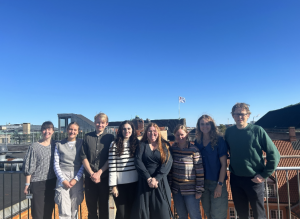
Title of the STSM:
Identifying the roles of epigenetic modifications contributing to cancer development in people with intellectual disabilities to guide future cancer preventive and diagnostic strategies for people with intellectual disabilities.
Grantee Name and Institution:
Dr Vladimir Vukovic
Faculty of Medicine, University of Novi Sad, Novi Sad, Serbia
Host Institution and Country:
School of Medicine, Yeditepe University, Istanbul, Türkiye
Dates of the STSM:
5–19 July 2023
Purpose of the STSM
Purpose was to understand the basic principles and laboratory applications of epigenetics and to explore how epigenetic modifications may contribute to cancer development in people with intellectual disabilities. A further aim was to establish a systematic review and meta-analysis assessing the available evidence on DNA methylation, microRNAs and other epigenetic mechanisms in people with intellectual disabilities and cancer, and their potential relevance for future cancer prevention and diagnosis.
What Was Achieved
- Capacity building: I gained knowledge of the principles of epigenetics and practical insight into laboratory techniques and their potential application to cancer research.
- New scientific collaboration: In collaboration with researchers at Yeditepe University, a study protocol was created as a structured basis for evaluating evidence on the association of epigenetic changes with cancer in people with intellectual disabilities.
- Study protocol developed: The study methodology was developed according to the PRISMA principles, with several in-person consultations and methodological discussions involving both senior and junior researchers. The study protocol was registered in the PROSPERO International Prospective Register of Systematic Reviews under registration number CRD42023446453, making the planned research publicly available.
Contribution to CUPID
The STSM contributed directly to the objectives of CUPID by strengthening the scientific understanding of cancer in people with intellectual disabilities and introducing an epigenetic perspective into cancer prevention and diagnostic research. The systematic review and meta-analysis initiated during the STSM is designed to investigate an important knowledge gap concerning the potential role of epigenetic mechanisms in cancer development in people with intellectual disabilities. The work may contribute to the longer-term identification of potential biomarkers for cancer prevention, detection and screening, supporting CUPID’s broader goal of developing more effective and inclusive cancer prevention strategies for people with intellectual disabilities. The STSM also strengthened collaboration between CUPID members and created links between epidemiology, cancer prevention and molecular/epigenetic research.
Outputs Arising from the STSM
A major tangible output of the STSM was the development and registration of the systematic review and meta-analysis protocol, cit: Vukovic V, Guvenc Tuna B, Dogan S. The role of epigenetic modifications in contributing to the cancer development in people with intellectual disabilities: a systematic review and meta-analysis. PROSPERO 2023; https://www.crd.york.ac.uk/PROSPERO/view/CRD42023446453
The protocol is publicly available through the PROSPERO registry and provides the methodological foundation for the subsequent scientific review and meta-analysis.
The STSM also resulted in:
- development of a new collaborative research activity between CUPID researchers;
- methodological exchange and capacity building in epigenetic and systematic-review research;
- identification of potential future research directions concerning epigenetic biomarkers and cancer prevention in people with intellectual disabilities.
Ongoing Impact and Sustainability
The collaboration established during the STSM continued beyond the physical visit through remote work on the systematic review and meta-analysis. The registered protocol provides a lasting methodological framework for completing the study and preparing the findings for publication in a scientific journal.
The STSM therefore created a sustainable research pathway and connection extending beyond the two-week visit, while also strengthening the participating researchers’ expertise and establishing opportunities for further collaborative projects in cancer prevention, epigenetics and intellectual disability research.
Title of Short-Term Scientific Mission (STSM)
Augmentative and Alternative Communication-Informed Cancer Prevention Education and Screening Communication for people with Intellectual Disabilities
Grantee Name and Institution:
Dr Margaret Denny,
University of Maribor, Slovenia
Host Institution and Country
- J. Šafárik University (UPJŠ), Košice, Slovakia
Date of STSM
8 April to 12 April 2026
Purpose of the STSM
The purpose of this Short Term Scientific Mission (STSM) was to explore how a workshop format incorporating Augmentative and Alternative Communication (AAC), Easy-Read information, and visual supports could enhance the accessibility of cancer prevention and screening information for people with intellectual disabilities. This STSM also provided an opportunity to evaluate the CUPID Evaluation Protocol (EP) and its Easy Read version, designed for people with intellectual disabilities, to assess the effectiveness of cancer prevention healthcare services within their various support systems. Conducted in a real-world setting at a Special Needs School in the community, the STSM aimed to strengthen meaningful international collaboration for effective and inclusive cancer prevention efforts.
Achievements
- An AAC-informed, Easy-Read workshop entitled “Ways of Talking about Cancer and Cancer Screening” was successfully delivered at a special school in Košice and received incredibly positive feedback. This workshop engaged adolescents with intellectual disabilities and autism, as well as educators, support staff, psychologists, and academic partners;
- The workshop employed AAC methods, Easy-Read materials, visual supports, and facilitated discussions to enhance understanding and engagement regarding cancer prevention, screening, and preparation for healthcare appointments;
- The CUPID WG1 EP was implemented in practice, including its Easy-Read version designed for people with intellectual disabilities and a service/organisation version;
- The feedback obtained from participants and staff provided essential insights for the further refinement of accessible CUPID EP resources;
- The STSM identified new opportunities for international academic collaboration and digital innovation in accessible cancer prevention and screening.
Contribution to CUPID
The STSM importantly advanced the objectives of COST Action CA21123 and specifically supported the aims of CUPID Working Group 1 (WG1), which sought to enhance the voice and participation of people with intellectual disabilities in cancer prevention and screening initiatives. Notably, the STSM transitioned WG1 outputs from development into practical application, illustrating how accessible communication strategies can support meaningful participation. The STSM also enabled the real-world testing of the WG1 EP among people with intellectual disabilities and service staff. Consequently, the STSM contributed to CUPID’s broader goals of promoting co-production, accessibility, meaningful stakeholder engagement, knowledge exchange, and mitigating inequalities in cancer prevention and screening.
Outputs Arising from the STSM
The outputs generated from this STSM include:
- An AAC-informed Easy-Read workshop on cancer prevention and screening, along with related accessible resources; practical piloting of the CUPID WG1 EP and its Easy-Read version;
- Participant and staff feedback to facilitate further EP refinement; and proposals for a peer-reviewed publication resulting from the STSM initiatives. Discussions with ESTEN s.r.o. also explored the potential development of an accessible digital application to support cancer screening monitoring, reminders, and communication for people with intellectual disabilities.
- Furthermore, academic meetings at UPJŠ identified additional opportunities for collaborative research, education, and knowledge exchange.
Ongoing Impact and Sustainability
The STSM established collaborations that extend beyond the five-day visit. Continued partnership with Slovak academic, educational, and service entities is ongoing, focusing on disseminating and publishing findings and developing accessible cancer prevention resources. The STSM also offers a practical framework for adapting and applying AAC and Easy-Read methodologies in various European contexts. Future opportunities for collaborative research projects, digital innovation, and European funding will continue to be explored, thereby ensuring CUPID’s sustainability and legacy beyond the duration of the CUPID COST Action.
I am text block. Click edit button to change this text. Lorem ipsum dolor sit amet, consectetur adipiscing elit. Ut elit tellus, luctus nec ullamcorper mattis, pulvinar dapibus leo.
Title of STSM: Development of the Türkiye Protocol on Cancer Prevention and Screening for People with Intellectual Disabilities
Grantee Name and institution:
Bahar Aksoy
Akdeniz University, Kumluca Faculty of Health Sciences, Department of Child Health and Disease Nursing, Türkiye
Host institution and country:
Trinity College Dublin, School of Nursing & Midwifery / Trinity Centre for Ageing and Intellectual Disability, Ireland
Dates of the STSM:
14–21 July 2024
Purpose of the STSM:
The STSM aimed to learn from Irish research, education and service models addressing cancer prevention, screening and healthcare inequalities among people with intellectual disabilities. The experience was intended to provide a foundation for developing a contextually appropriate cancer prevention and screening protocol for people with intellectual disabilities in Türkiye.
What was achieved:
The STSM enabled me to gain first-hand insight into the work of the Trinity Centre for Ageing and Intellectual Disability and the role of Intellectual Disability Nursing in cancer prevention, early detection and health promotion. I also observed services at Stewarts Care and gained an understanding of multidisciplinary approaches to supporting people with intellectual disabilities.
Key outcomes included:
- Gaining knowledge of Irish approaches to cancer prevention, screening and healthcare for people with intellectual disabilities;
- Understanding the contribution of Intellectual Disability Nursing to prevention, early detection, advocacy and health promotion;
- Observing multidisciplinary and person-centred services at Stewarts Care;
- Identifying approaches that could inform cancer prevention and screening strategies in Türkiye; and
- Strengthening collaboration with Dr Martin mcmahon and the Trinity Centre for Ageing and Intellectual Disability team.
Contribution to CUPID:
The STSM directly supported CUPID’s focus on reducing cancer inequalities experienced by people with intellectual disabilities. By facilitating knowledge exchange between Ireland and Türkiye, it strengthened research capacity and supported consideration of how evidence and practices from established intellectual disability services could be adapted to the Turkish context. This aligns particularly with CUPID’s broader objectives concerning equitable cancer prevention, screening and access to appropriate healthcare for people with intellectual disabilities.
Outputs arising from the STSM:
A major outcome was the development of a foundation for future work towards a cancer prevention and screening protocol for people with intellectual disabilities in Türkiye. Knowledge and observations gained during the STSM were also shared with colleagues in Türkiye, supporting further research and capacity building in this area.
Ongoing impact/sustainability:
The STSM established a basis for continued international collaboration and future research on cancer inequalities among people with intellectual disabilities. The experience continues to inform work aimed at improving cancer prevention, screening and equitable access to cancer services in Türkiye.
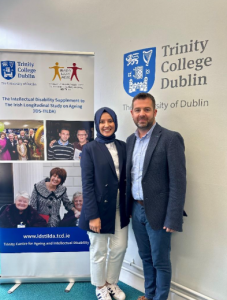
Photograph: Dr Bahar Aksoy and Professor Martin McMahon, TCD
Title of STSM: Inclusive practice involving people with learning disability
Grantee Name and institution: Prof Jean Calleja Agius from the Faculty of Medicine and Surgery, University of Malta
Host institution and country: Northumbria University, School of Communities and Education, Faculty of Health and Wellbeing, Coach Lane Campus, Newcastle upon Tyne, NE7 7XA, United Kingdom
Dates of the STSM: 19/07/2026 till 23/07/2026
Purpose of the STSM: The main purpose of my visit was to learn from Dr Kate Sykes about how she and her team carry out inclusive research methods together with people with learning disabilities. I also gave a lecture to Dr Sykes’ colleagues at University part of the Research Conversations series.
What was achieved:
I visited Botton Village, which is a Camphill community located in the North York Moors National Park, North Yorkshire. It is a sustainable, largely self-sufficient settlement where adults with learning disabilities and other complex needs live and work alongside support staff and volunteers. I learnt about co-production, co-leading events, managing community co-production initiatives, and guiding farm-to-fork projects.
I took part in an Easy Read research document project. This took the format of a ‘World Café’, where my host, myself and a colleague from the Department of Psychology led a series of small group sessions. These sessions involved a total of 21 participants, of whom 9 persons had intellectual disability. My role was to draw up a list of positive and negative ways that information can be delivered, especially in matters related to health care.
I also had the opportunity to share my knowledge with academic colleagues by delivering a guest lecture entitled ‘Fertility Preservation in Patients with Rare Gynaecological Cancer’.
Contribution to CUPID:
I attended a CUPID COST WG3 meeting, led by Dr Kate Sykes, where we worked on a systematic review. This is one of the main deliverables of WG3.
Thanks to this STSM, I had the opportunity to be fully immersed in the world of inclusiveness and accessibility for persons with intellectual disability. I have shared my expertise and I have expanded my network beyond the clinical and academic circles that I am normally exposed to in my work as a medical doctor. Thus, I can now collaborate with more members of the multidisciplinary team, with a view of being involved in more international projects, even once the CUPID project ends.
Outputs arising from the STSM:
Together with my host and other colleagues from CUPID, I was involved in the write-up of a grant entitled ACCESS-ID and indeed this has now been submitted. We will also be submitting a publication, which is a systematic review. The results of the ‘World Cafe’ workshop will be compiled and will be used to conduct the next workshop on the actual design of easy-read documentation.
Ongoing impact/sustainability:
We intend to collaborate in an ERASMUS project as part of Blended Learning Project, involving our respective universities and Camphill Village Trust. This will take the form of a summer school aimed at undergraduate and postgraduate students following courses in nursing, disability studies and social work.
I started a collaboration with a Research Fellow in Health Psychology at Northumbria University, about the role of the multidisciplinary team in the management of patients with ovarian cancer.
As part of the series of workshops being organised by Dr Kate Sykes, I will assist in the co-production of Easy-read consent forms to be used as a reference guide when planning research involving persons with intellectual disability.
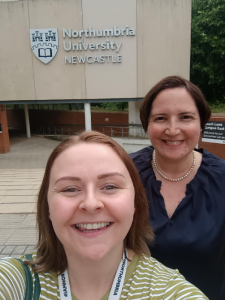
Photograph: Prof Jean Calleja Agius and Dr Kate Sykes, at Northumbria University, Coach Lane Campus, Newcastle upon Tyne, UK.