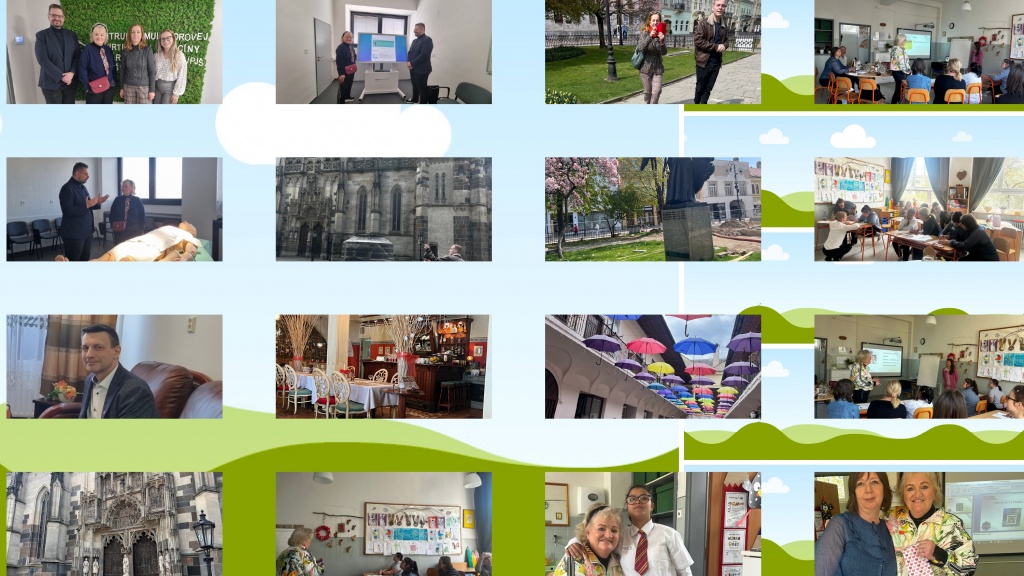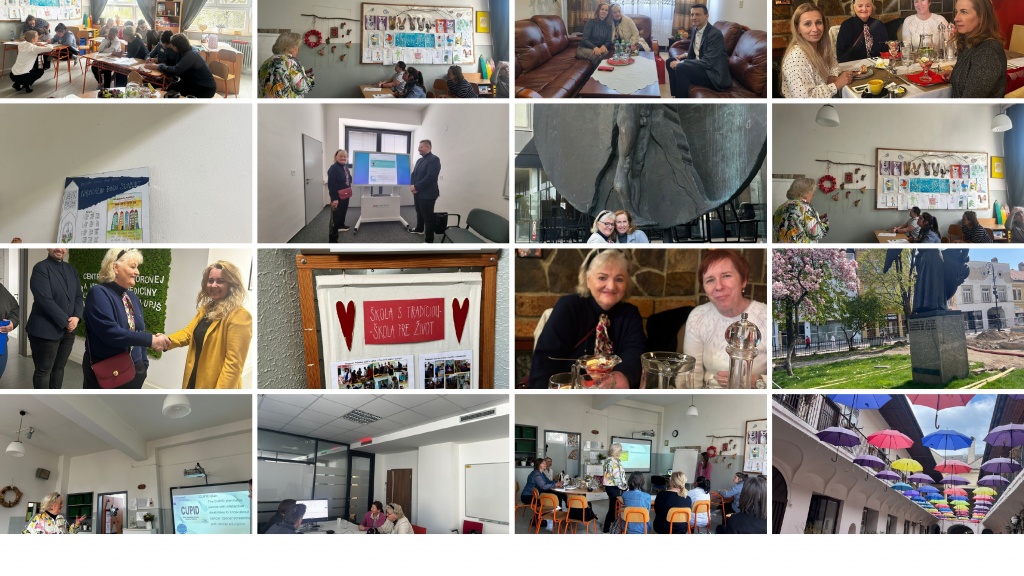
As part of COST Action CA21123 (CUPID), a Short-Term Scientific Mission (STSM) took place in P. J. Šafárik University, Košice, Slovakia. The goal was to facilitate a workshop in a special school to make it easier for people with intellectual disabilities to talk about cancer prevention and screening. At the school in Košice, Dr Margaret Denny led a workshop on augmentative and alternative communication (AAC) using Easy-Read materials with students with disabilities. The objective was to help them learn more about cancer awareness, screening, and how to talk to doctors and healthcare staff. Teachers and university staff also attended the workshop. It was delivered in English and Slovak with assistance from Mag Olga Silvasiova. (WG1- member). In addition, the STSM piloted the CUPID cancer evaluation protocol (EPs) tools for people with intellectual disabilities and services, which were developed by Working Group 1. These tools allow people with intellectual disabilities and their services to evaluate cancer prevention programmes. Stakeholders, including service providers and people with disabilities, actively contributed feedback on the EPs. The university, special school, and related services collaborated to refine these EPs, with further meetings that discussed upcoming projects, research, and the development of a digital application by ESTEN s.r.o. to support participation in cancer screening among people with intellectual disabilities. This collaboration aligns with CUPID’s objectives of fostering inclusion, accessibility, and cross-European cooperation. A very special thank you is extended to Dr Gabriela Štefko, PhD, for her leadership in these efforts.
Acknowledgement
I wish to acknowledge the generous support and collaboration of Dr Gabriela Štefková, PhD, Assistant Professor, (Lekárska fakulta), Department of Nursing (Ústav ošetrovateľstva), Faculty of Medicine (Lekárska fakulta), P.J. Šafárik Univerzity in Košice (Univerzita Pavla Jozefa Šafárika [UPJŠ] v Košiciach), Tr. SNP 1, Košice, Slovakia. From the Faculty of Medicine, I really appreciated the engagement with Professor Pavol Kristian, PhD. (e-mail: pavol.kristian@upjs.sk), Vice-Dean for Scientific and Research Activities at UPJŠ; Professor Dr Lucia Dimunová, PhD., Head of the Department of Nursing, PhDr Beáta Grešš Halász, PhD., MPH, associate professor. From the Spojená škola, where the STSM activity took place, I was incredibly grateful for the support of Mag Iveta Baková, School Director; Mag Martina Pješčáková, School Representative; and WG1 member, Mag Olga Silvasiova. The Centre of Simulator and Virtual Medicine, represented by Associate Professor Jaroslav Majerník and Mr Peter Hajdu. To the host University, Dr Gabriela Štefková, and especially the staff at Spojená škola, partners in Košice, Mag Olga Silvasiova, and the staff at ESTEN s. r. o., whose engagement and support were really appreciated.